The Torcedor's Hands
Every premium cigar passes through nine operations and a single pair of hands. An anatomy of how a cigar is built, from filler to cap.

The cigar on your table was built by hand. Not assembled. Built. Leaf by leaf, in a long room called the galera, by someone who has done it ten thousand times.
Nine operations. The hands of a torcedor, sometimes two pairs on one cigar. No machine has ever learned the feel.
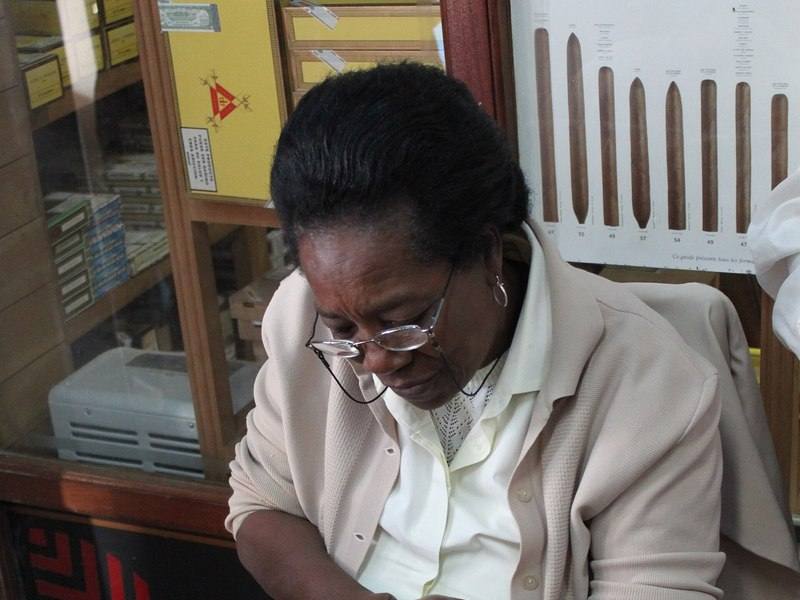
The worker is the torcedor. The torcedora, if she is a woman. The room is the galera, the gallery, and in the old factory houses it still feels like one: rows of boards, a reader's voice or a radio carrying over the work, the smell of cedar and cured leaf.
The work looks simple until you try it. The leaf tears, the bunch sags, the wrapper wrinkles. The simplicity is the point: there is nowhere for a flaw to hide, and the hands know it.
The room and its ranks
Many factories divide the labor. The bunchero builds the bunch, filler rolled inside binder. The rolero, or rolera, dresses the bunch in its wrapper leaf. Two specialties, two pairs of hands, one cigar.
Cuba grades its rollers the way old trades grade craftsmen, by one account through seven levels. The fourth is standard. The seventh is the true master, who can make any size. The day's workload follows the grade, and the most demanding vitolas go to the higher levels. Students take up to nine months to complete training before they may roll cigars for export.
Nine months to qualify. Years after that before the hands stop making the beginner's mistakes.
The hierarchy is practical, not ceremonial. A large ring gauge forgives nothing: more leaf, more seams, more places for a flaw to show. The roller earns the big formats the way a musician earns the concerto.
Filler, binder, wrapper
Three parts. The filler is the tripa, the guts. The binder is the capote, the shape. The wrapper is the capa, the skin.
The filler is a blend of leaves sorted by their position on the plant. Ligero grows at the top: strong, full of nicotine, slow to burn. Seco grows in the middle: the aroma. Volado grows low: mild, and it burns well. The ligero sits at the center of the bunch, where the heat runs highest. The seco wraps around it. The volado goes outermost. Reverse the order and the balance breaks: the center and the edges no longer burn at their intended speeds.
Cuban experts put the number at 93 percent. That is the filler and binder's share of a cigar's flavor and combustion, with seven percent credited to the wrapper. The wrapper is the thinnest leaf on the plant, usually shade grown, chosen for beauty first and flavor second. The binder is most often a volado leaf. Its job is structure.
The wrapper gets the care because it shows. One leaf per cigar, stretched to its limit, because there is no patching a wrapper.
The tools
The tabla, a wooden board. The chaveta, a half-moon blade. Wooden molds and a press. A dab of tasteless vegetable gum, in Cuba traditionally from the Dagame tree. That is the kit, and it has barely changed in a century.
The chaveta does most of the talking. The roller rocks the half-moon blade to trim the binder and cut the wrapper to shape, keeping every edge true. A dull chaveta tears leaf. A sharp one is an extension of the hand.
Nothing is powered. No timers beyond the roller's judgment, no instruments beyond the ring gauge. The press squeezes, the mold holds, the board takes the work. The technology of the torcedor is the torcedor.
Nine operations
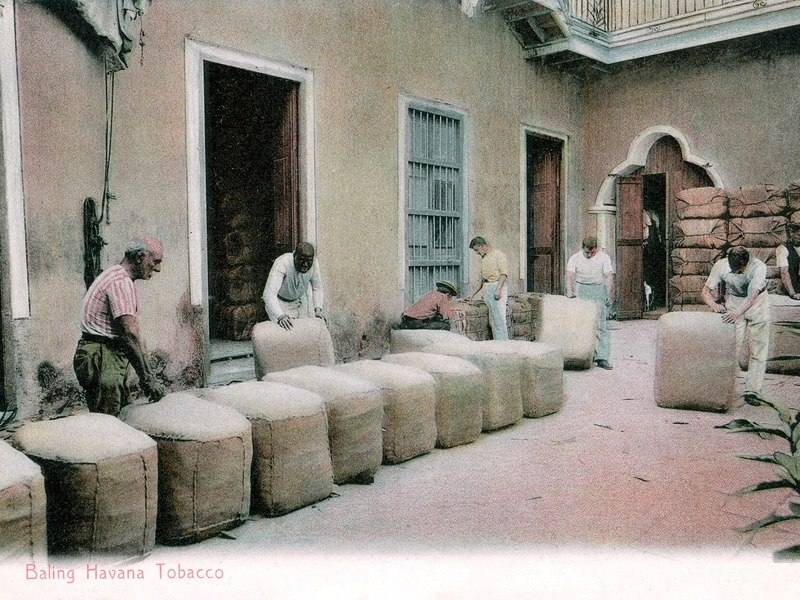
First, the leaf is prepared. Aged bales are cased, moistened until supple, then deveined and sorted by type. The master blender has already set the mixture of each leaf for the day's cigars.
Then the bunching. The torcedor takes the filler in hand and feels for evenness. Thin spots are filled with trimmings. Leaves are folded and broken to size. Air channels must survive the squeeze, or the cigar will never draw.
The binder goes on next, stretched even and rolled firm. A slack binder leaves dents in the finished cigar. A crooked trim here will show up later, when the cap sits crooked and the cut bites too deep.
Press and test
Into the mold, into the press. Thirty to forty minutes under pressure gives the bunch its shape.
The mold is wood, not steel. It sets the bunch's dimensions without crushing the air channels the bunchero built by hand.
Then the draw test. At Tabacalera de García, pressed bunches go onto a suction machine before the wrapper is applied, and only bunches that pull clean move on. The rest go back. At Tabacalera de García, José Seijas introduced the draw-test in 1984. In the first week it rejected 35 percent of production. Today it rejects two to three percent.
Wrap, cap, rest
Wrapping. The wrapper leaf is stretched, cut with the chaveta, and rolled in a spiral from foot to head. The veins face upward, so the finished surface stays smooth. A dab of gum seals the seam.
The cap. A small disc of wrapper, punched or cut, set into the head with a touch of glue. Set right, it keeps the wrapper from unraveling when the smoker cuts.
Then rest. Finished cigars sit in humidified rooms before they ship. The leaf settles. The blend marries. What left the table as components leaves the aging room as a cigar.
Some houses rest their cigars for weeks. Others hold them for months. The principle is the same: a cigar is not finished when it is rolled. It is finished when it is ready.
The pace
A roller turns out 150 to 200 cigars a day in the smaller formats, 100 to 150 in the larger ones. The pace is quick because the workload is counted in finished cigars. The skill is slow because it took years to earn.
The best rollers are fast without hurrying. Speed is the byproduct of ten thousand repetitions, not its goal.
The next time a cigar draws clean and burns straight, know what you are holding. Nine operations. The hands of a torcedor, sometimes two pairs on one cigar. No machine has ever learned the feel. It probably never will.