
Off-Grid: Wildfire Bets the Company on the Monthly Drop
The fifth release in Wildfire Cigar Co.’s made-to-order monthly series wears a towable trailer on its band. The October cigar is a 5 1/4 x 54 from Tabacalera William Ventura, priced at $14.

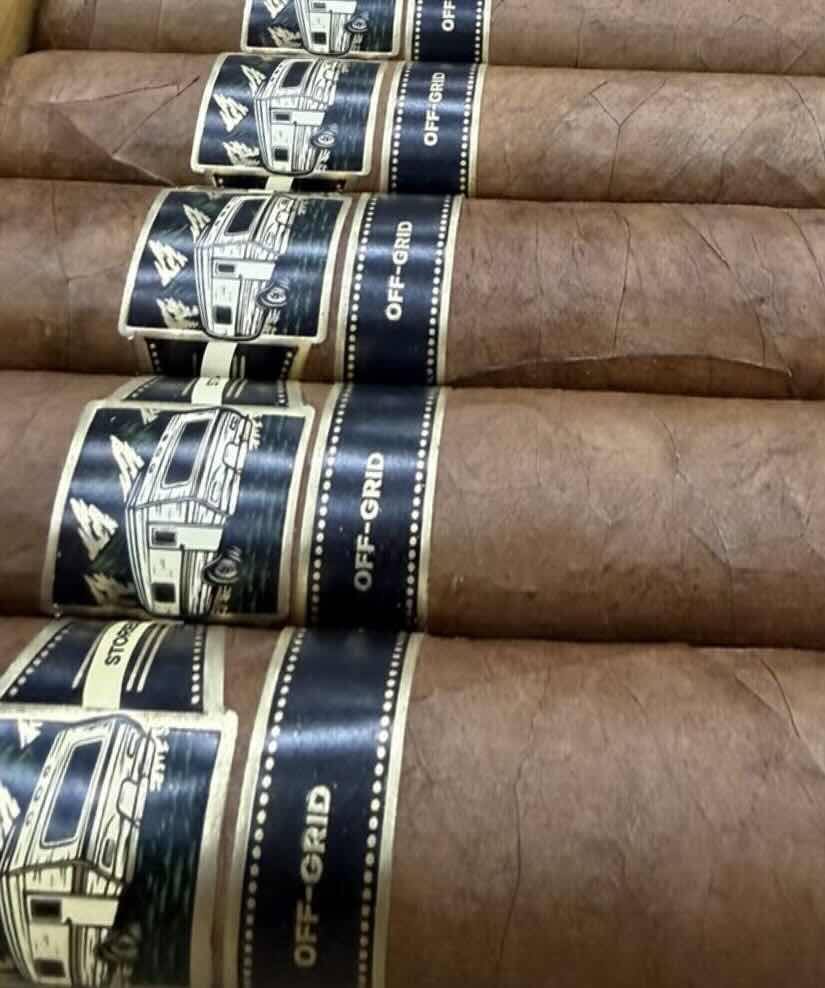
Wildfire Cigar Co. released Off-Grid on October 6, the October installment in its monthly series of limited-edition cigars. It is a 5 1/4 by 54 robusto extra, rolled at Tabacalera William Ventura in the Dominican Republic, and it sells for 14 dollars per cigar in ten-count boxes. The band carries a drawing of a towable RV against mountains and pines.
Wildfire is asking its smokers to buy the next thing instead of the same thing, every month, on purpose.
The blend: an Ecuadorian Habano wrapper over an Indonesian Sumatra-seed binder, with filler tobaccos from Ecuador (Corojo), Nicaragua (Esteli), and an undisclosed HVA component. It is the fifth iteration of the series, following Dead Drift and The Fault Line, and it keeps the monthly cadence the company has set for the line, right on schedule.
The pivot
Off-Grid matters less as a cigar than as a business model. Wildfire has done away with regular production entirely. The company no longer keeps standard lines on the shelf; instead it releases limited editions on a monthly cadence. Earlier installments included Dead Drift and The Fault Line. McDonald, the company’s principal, says the series is informally called the Camp Counselor Enrollment Program, a name that tells you everything about the intended vibe: the outdoors, the gathering, the ritual of showing up. The bet is that scarcity on a schedule can replace continuity.
It is a recognizable playbook from outside cigars, and a rare one inside them. Most small cigar companies live or die on a core line that retailers can reorder. Wildfire is asking its retailers and its smokers to buy the next thing instead of the same thing, every month, on purpose. The made-to-order part matters as much as the monthly part: the company rolls what is ordered, which means no stale boxes aging on shelves and no quiet discounting to move them. The trade-off is that every month is a new product launch, with new artwork, new bands, and a new story to tell, twelve times a year.
The trailer
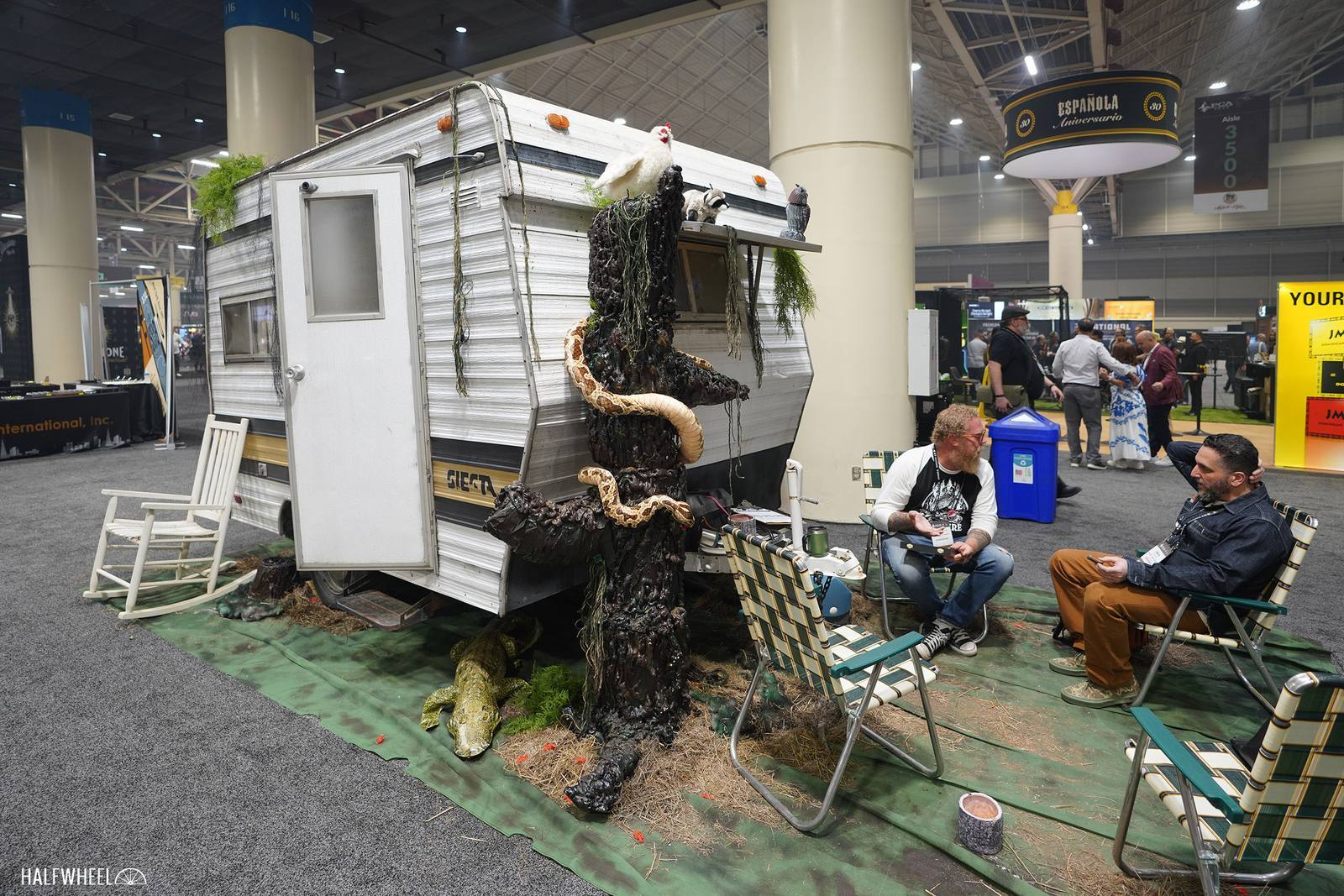
The artwork is doing real work here. The towable trailer on the band is not a random emblem: Wildfire has built its trade show booths around a similar trailer, including its PCA 2026 setup, a full campsite diorama with rocking chairs, a swamp scene, and a trailer wearing SIESTA on its flank. Photographs from the show floor show the bit fully committed: lawn chairs, a rocking chair, even an alligator prop by the door. The band is the booth, miniaturized. For a company selling a monthly story, the visual continuity matters as much as the tobacco.
The company’s own description of the cigar is a mood as much as a blend: a reminder to put down the phone and take a moment, with soft spice, cinnamon, subtle wood, and delicate floral notes finishing in a sweet tang. ‘Slow down. Disconnect from the noise. Take the time for yourself, and enjoy it,’ the release says. That is the whole pitch, really. The cigar is the excuse; the disconnection is the product.
The monthly test
Whether the monthly model holds is the open question. Made-to-order means no stale inventory and no discounting, but it also means every month starts at zero. For retailers, the pitch is a standing reason to call their customers: something new, on a schedule, in a fixed quantity. For the company, it means the blending calendar never stops. A monthly series is a publishing schedule with tobacco, and missing a month is visible in a way that a quiet quarter for a core line never is.
Five releases in, Wildfire has a rhythm. The test is whether the sixth, seventh, and twelfth months feel like chapters or like a treadmill. The early evidence favors chapters: each release has carried its own artwork and its own story, and the trailer gives the whole enterprise a mascot. For now, the trailer keeps rolling.


