Cameroon: Africa's Wrapper
From a rainforest on the Cameroon border comes what the Meerapfel family describes as the most expensive wrapper leaf in the industry.

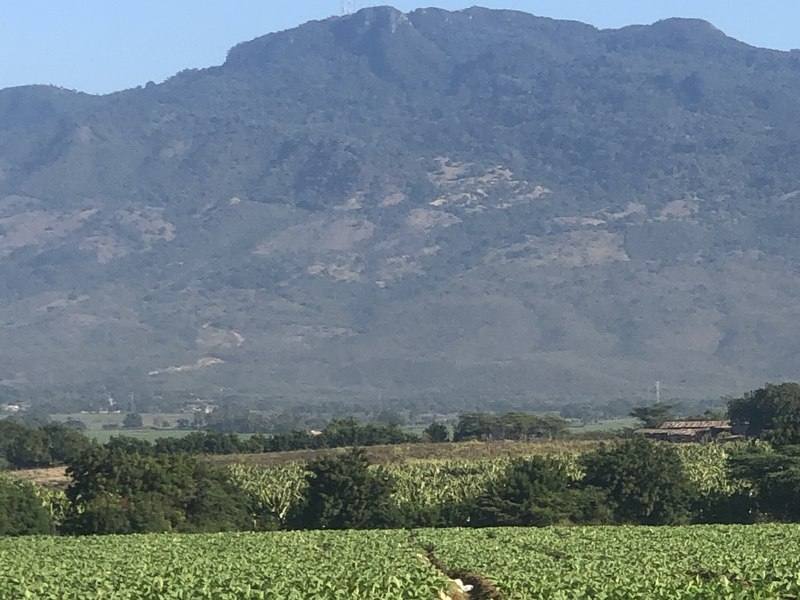
Genuine Cameroon leaf grows in rainforest on the border between Cameroon and the Central African Republic, deep inside what has been described as the second-densest jungle on earth. It is a long way from Estelí and the Cibao, and it tastes like it: nowhere else grows leaf quite like this.
The leaf is delicate and somewhat dry in texture, light to medium brown, with a rosado reddish hue and a toothy surface covered in tiny bumps. Published descriptions credit its sweetness and spice, and the interplay between them, to the minerals in the region's rich virgin soils. Growing it has always been difficult, and decades of political unrest have made it harder. Difficulty is part of the price.
Cameroon seed is now grown in other countries too. The genuine article still comes from the jungle. The difference, smokers say, is in the tooth.
The wrapper's character is documented in trade writing rather than invented here: delicate, dry, light to medium brown, with a natural sweetness balanced against spice. The descriptions agree with each other, which in this industry is saying something.
The tooth is the tell. Run a finger along a Cameroon wrapper and the surface feels fine-grained, almost sandy: tiny bumps raised in the leaf. Other wrappers are smooth. Cameroon has texture, and blenders prize it because texture holds flavor.
The French connection
The commercial history runs through France. Cameroon tobacco was once the raw material of the French black-tobacco cigarette industry, and its potential as a premium cigar wrapper went unrecognized for years. When France halted production in the 1990s, a crisis loomed: 40,000 direct jobs at risk, more than half a million people affected indirectly.
Richard Meerapfel, of the Meerapfel tobacco family, drove from Brussels to Paris and bought the French government's monopoly. The major cigar brands of the Dominican Republic and Honduras subsequently built their luxury lines on precisely that leaf. One family's gamble became an industry's staple.
The French black-tobacco industry had used the leaf for cigarettes, not cigars. The wrapper potential sat in plain sight for decades. It took a family's crisis purchase to move Cameroon leaf from the cigarette factory to the rolling table.
The purchase was personal as much as commercial. Richard Meerapfel drove to Paris on impulse, family accounts say, and bought the monopoly outright. Forty thousand jobs were at stake. The leaf had to go somewhere. He made sure it went to cigars.
The Meerapfels
The family had been in tobacco for centuries. In 1876 it opened its first cigar manufactory in Karlsruhe, Germany. Jeremiah Meerapfel's grandfather became the largest exporter of Cuban tobacco of his era, a chapter the 1959 Cuban Revolution closed. The family turned to Cameroon.
In 2003 a coup in the Central African Republic led to the expropriation of the family's enterprises there. Richard Meerapfel, who by the family's account had built schools and clinics across the region, lost his life's work and suffered a heart attack soon after. He died. His sons Jeremiah and Joshua asked what four centuries of experience could change about the mechanics of tobacco itself, and built their own ultra-premium brand.
The answer was fermentation. Most producers accept yield losses of ten to fifty percent. The Cameroon leaf in the Meerapfel Créateur line is fermented so radically that only about seven percent remains: by the family's account, the most expensive wrapper leaf in the industry. It ages not in the Caribbean but in Brussels, in warehouses without temperature control, like Bordeaux in a château cellar. The tobacco in the cigars presented at a Zurich event was twenty-seven years old.
Jeremiah Meerapfel compares the ambition to Bugatti or Pagani: not an everyday product, but engineering at the highest level. The comparison is deliberate. The Créateur line is not priced for the daily smoker. It is priced for the believer.
The Brussels aging is the family's signature heresy. The industry ages tobacco in the Caribbean, in heat and humidity. The Meerapfels age in Belgium, cool and uncontrolled, the way Bordeaux rests in a château cellar. Twenty-seven years in that cellar changes what the leaf is.
On the shelf
The leading authentic Cameroon cigars are familiar names: Arturo Fuente's Hemingway and Don Carlos. A retailer confirms the Don Carlos recipe: African Cameroon wrapper over vintage Dominican binder and filler. The wrapper is the star; the Dominican leaf is the frame.
The Hemingway line, with its perfecto shapes, showed what the leaf could do in the 1980s. The Don Carlos showed what it could do with age underneath. Both remain the reference points for anyone learning the wrapper.
The Don Carlos recipe is worth stating plainly: African Cameroon wrapper over vintage Dominican binder and filler. No mystery leaf, no secret sauce. The wrapper does the talking.
Supply stays constrained. The 2003 coup destroyed the Meerapfels' work in the Central African Republic, regional instability persists, and the leaf's fragility makes it demanding to roll. That is why Cameroon ranks among the most sought-after and expensive wrappers in the world. Scarcity is not a marketing plan here. It is the weather, the politics, and the jungle.
Every other wrapper region sells abundance: acres, harvests, factories. Cameroon sells the opposite. A little leaf, from a hard place, handled by few hands, fermented until almost nothing is left. By the family's account, the most expensive wrapper in the industry is the one the jungle almost keeps. The leaf is the story: toothy, reddish, sweet against spice, from a jungle most smokers will never see.