Estelí: After the Boom
Nicaragua's northern highlands survived revolution, expropriation, and embargo to become the handmade cigar's capital.

Nicaragua makes more handmade premium cigars than any country on earth. Some seventy factories roll nearly 150 million cigars a year under five thousand different brands. The capital of that industry is Estelí, a highland city in the north, and the leaf that made it is dark, volcanic, and strong.
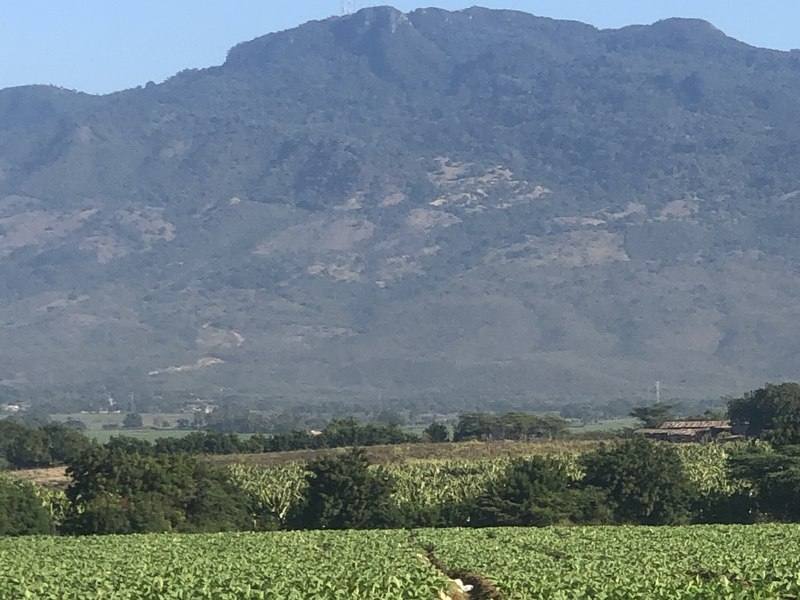
Estelí's soil is dark and mineral-rich, the product of old volcanic earth. It gives the local leaf its characteristic strength: corpulent leaves with spicy, strong, rustic notes. Two other northern valleys complete the picture. Condega sits between Estelí and Jalapa in character; Jalapa, near the Honduran border, grows the sweetest leaf. The same seeds in different soils give different flavors, and blenders have built careers on the differences.
At least half of Estelí's population lives off the cigar industry in one way or another: growing, curing, rolling, boxing, shipping. For every direct job, three or four indirect ones follow. The boom did not just build factories. It built a city.
The leaf travels. Nicaraguan tobacco is now a raw material for the whole industry: E.P. Carrillo's Encore Majestic, named Cigar of the Year for 2018, is all-Nicaraguan leaf rolled in the company's Dominican factory. Estelí grows for the world, not just for itself.
The exiles arrive
Before the 1960s, Nicaragua grew tobacco but rolled few cigars. Then Fidel Castro nationalized Cuba's plantations and factories, and the Cuban cigar families fled to the Dominican Republic and Nicaragua. Nicaragua's soil and climate suited the Cuban seed, and the timing could not have been better.
In 1962 the United States embargoed Cuba, closing the world's largest premium market to Habanos overnight. The exiles had leaf, skill, and suddenly an open field. Anastasio Somoza's government backed them through a development bank called INFONAC, which supplied insecticides and machinery. By 1968 Joya de Nicaragua was operating, the country's first premium cigar manufacturer, and by 1976 the young industry held almost a fifth of American premium cigar sales.
The state bank's role is easy to forget and worth remembering. INFONAC imported the insecticides and the machinery and put them in the exiles' hands. The industry was not a pure market accident. It was a government bet on refugees, and it paid.
Revolution and embargo
The success was short-lived. The Sandinista revolution deposed Somoza in 1979, and the war came to the factories: farms and rolling rooms were set ablaze, and at one point Somoza-loyal planes bombed the Joya de Nicaragua factory from the air, though Somoza himself had helped found it eleven years earlier.
The Sandinistas expropriated farms and factories along Castro's model, and the exiles moved again. Arturo Fuente relocated to the Dominican Republic; others crossed into Honduras. Then, in 1985, the United States embargoed Nicaragua, cutting the industry off from its largest market a second time. The embargo was lifted after the 1990 election brought a non-Sandinista government to power, and families like the Plasencias were granted new fields to replace the ones they had lost. The mid-1990s cigar boom did the rest. What exists in Estelí today was built on the rubble of two revolutions and two embargoes.
The 1984 embargo was the crueler cut, because it punished the victims of the first disruption. Nicaraguan cigars could not be sold in America, their largest market, for six years. The factories that survived did it on fumes and on other markets. When the embargo lifted, they were lean, and the boom found them ready.
The builders
Padrón came early and stayed. Founded in Miami in September 1964 by Cuban-born José Orlando Padrón, the company established production in Estelí in 1970, moved it to Honduras during the embargo, and ultimately returned. In 2003 it opened a new rolling center, its seventeenth building in the city, bringing total space to 75,000 square feet, most of it tobacco storage. The company controls growing, sorting, processing, manufacturing, and distribution: the vertical model, executed patiently.
My Father is the exile story in miniature. José 'Pepín' García was born in Cuba and rolled from a young age before emigrating to Miami, where he opened a small factory called El Rey de los Habanos. His cigars drew high scores, and the family expanded to Nicaragua: a factory called TACUBA in 2006, then the larger My Father Cigars S.A. in Estelí in 2009. Flor de las Antillas was named Cigar of the Year in 2012; My Father Le Bijou 1922 took the honor in 2015. The family also makes Tatuaje, San Cristóbal, and La Aroma de Cuba.
Drew Estate is the improbable one. Jonathan Drew and Marvin Samel were two young men from New York who started with a sixteen-square-foot retail kiosk in the World Trade Center. In late 1998 Drew moved to Estelí with a handful of rollers and little money. In July 2007 the company opened La Gran Fábrica Drew Estate: more than 96,000 square feet, described as Nicaragua's largest cigar factory, producing a reported 94,000 handmade cigars a day. No Cuban inheritance. No family vega. Just nerve.
The factory's scale is the point. Ninety-four thousand cigars a day, handmade, in a building painted with murals by the company's own studio. Drew Estate bet that craft and spectacle could live under one roof. The bet paid.
Nestor Plasencia Sr. is the quiet giant. Born in Cuba in 1949 to a tobacco family that emigrated after the Revolution, he lost his Nicaraguan farms and factories to Sandinista expropriation in the early 1980s and shifted across the border to Honduras. He reopened in Ocotal and Estelí in the early 1990s. Output grew from about one million cigars in 1986 to roughly 33 million a decade later, across thirty-plus labels. His factories have rolled for J.R. Tobacco, Swisher International, and Rocky Patel. In the mid-1990s about seventy percent of the tobacco in his cigars came from his own Honduran and Nicaraguan fields. His advice to the certain: 'Anyone who tells you they know everything there is to know about tobacco is either a liar or a fool.'
After the boom
The boom ended, as booms do. The industry did not. In 2018 political turmoil rocked Nicaragua again, and the country still surpassed the Dominican Republic to become the world's largest cigar exporter. The pandemic years tested it further. It held.
Joya de Nicaragua, the first premium manufacturer, remains a working brand, its Antaño 1970 a deliberate echo of the force it was in the 1970s. The elder statesman still rolls in the city it helped build.
And the soil keeps no ledger of who owned it. Volcanic earth does not remember expropriations or embargoes. It grows leaf. The rest is up to the people in the room.
Estelí's lesson is not that booms last. It is that what survives a boom is stronger than what the boom built. The exiles who arrived with nothing built factories that outlasted two revolutions. The rollers who learned the trade in the 1990s are the masters now. The volcanic soil is still there, dark and mineral-rich, growing the strong leaf that made the city's name. The boom was the noise. The city is the signal.