Vuelta Abajo: The Benchmark Leaf
In Cuba's far west, a forty-thousand-hectare district grows the tobacco every other region is measured against.

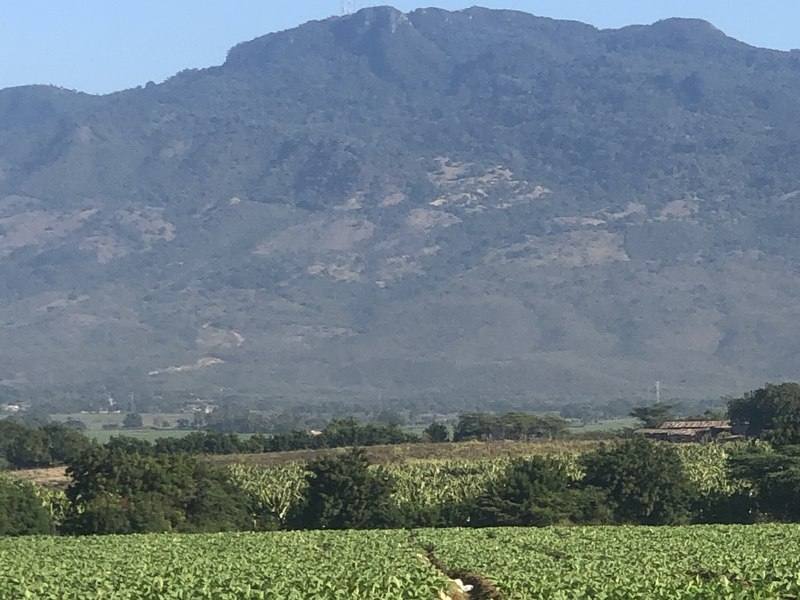
The road west out of Havana flattens into limestone country and then rises into the mogotes: steep, round-topped hills that look dropped onto the plain by a careless hand. Some 150 kilometers from the capital, in the province of Pinar del Río, the hills give way to the Vuelta Abajo, a territory of roughly 40,000 hectares bordered by the Sierra de los Órganos and crossed by the Guama River. The Cubans call it the green gold triangle.
Of the island's five tobacco-growing regions, it is the only one where all types of leaf are grown: wrapper, binder, and filler. For smokers outside the United States, the cigars made from this leaf, the Habanos, are still the reference point against which everything else is judged. The long American embargo keeps them off American shelves. It has not diminished their standing anywhere else.
The region's reputation rests on particulars, not mystique. Soil chemistry, rainfall, humidity, and a classification system with no sentimentality in it. What follows is the record.
The terroirs
The Vuelta Abajo comprises seven districts and four named terroirs. Consolación del Sur grows sub-cape. Pinar del Río grows tripe. San Juan y Martínez grows tripe and under-cape. San Luis grows cape, the wrapper leaf. In shorthand: San Luis is wrapper country, San Juan y Martínez filler and binder country.
The best vegas, the finest fields, sit in San Luis and San Juan y Martínez, in the El Llano district. Fewer than a quarter of the region's lands hold the Vegas Finas de Primera distinction required for Habano tobacco, and those fields are said to account for forty percent of the island's total premium leaf. The soil decides. The men only harvest.
The classification system is the region's quiet bureaucracy. Wrapper, binder, and filler are graded by size, color, texture, and position on the plant, and only the top grades earn the Habano name. The rest goes elsewhere. The hierarchy is strict, and it is what keeps the top of the pyramid narrow.
Soil and climate
The soils were formed in the Quaternary era from limestone debris eroded off the surrounding hills, then covered with silt carried down by the watercourses. The result is silty clay and sandy clay: loose enough for roots, retentive enough for water. Nitrates and minerals run high, and tobacco grown here develops the full-bodied richness that made the region's name.
The climate cooperates almost suspiciously well. The growing season runs from October planting to May harvest, with an average temperature of 25.5°C, annual rainfall above 1,000 millimeters, and relative humidity around 79 percent. The mountains shelter the crop from the worst downpours while feeding it irrigation. It is the sort of terroir that looks designed, though no one designed it.
Growers plant in October, when the rains ease, and harvest from January through March. The dry season runs November to April, the wet season May to October, and the rhythm of the whole province follows the leaf.
Scale of the state
Cuban reporting for 2016 put annual plantings at about 80,000 acres, harvested entirely by hand; more recent reporting shows smaller areas under cultivation. Pinar del Río province holds more than 16,000 hectares of tobacco and accounts for roughly seventy percent of Cuban output, all of it under the state enterprise Tabacuba, created in July 2000. Reported figures for 2016 put national production at almost 300 million hand-rolled cigars a year, about 100 million of them for export.
The numbers are reported, not audited, and they move with the weather. But the proportion has held for decades: most of Cuba's cigars begin in this one province.
That scale coexists with fragility. In 2022 Hurricane Ian struck with gusts to 208 kilometers per hour. The province held roughly 33,000 tonnes of stored tobacco, and emergency work focused on moving or protecting the inventory, though about 11,000 tonnes still became wet, but 226 tonnes of the August harvest were damaged in San Luis alone, and drying sheds and storehouses across the region were destroyed. In some places corn and bean fields have replaced tobacco since. The Vuelta Abajo is a benchmark, not a machine.
Corojo
The region's most famous seed is the one it no longer grows. Corojo was developed by Diego Rodríguez at his farm Santa Inés del Corojo, near San Luis, and perfected by his son Daniel María Rodríguez. Between the 1930s and the 1990s it wrapped all Cuban cigars, regardless of brand or factory, its spicy punch becoming the country's signature.
Blue mold and black shank disease ended the reign. Cuban agronomists bred resistant hybrids, and the last pure Corojo harvest in Cuba came in the 1996/97 agricultural year. Today pure Corojo grows in the Jamastrán Valley of Honduras and, under the name Kenbano, in western Kentucky. The family that created it left Cuba after the Revolution; members grew the seed in Havana, Florida, and Nicaragua, then moved on to other crops. The leaf survived the family's exile. It just does not grow at home anymore.
The hybrids that replaced it are disease-resistant and reliable. Whether they match the original is a question Cuban smokers debate with the heat of theologians. The record keeps the facts. The palate keeps the argument.
From field to tercio
Harvest is leaf by leaf, from the bottom of the plant upward, all by hand. Filler leaf, the criollo, grows in full sun. Wrapper grows under tapados, fine cheesecloth netting that evens out the light and gives the leaf its uniform color and texture.
In the casas de tabaco the leaves hang on poles for about fifty days to dry, then ferment for about thirty. After classification comes a second fermentation of up to sixty days. The finished bales are packed into tercios of 150 pounds, wrapped in royal palm leaves and burlap, and rested for up to two years. Nothing is hurried. The leaf is ready when it is ready.
The casas de tabaco themselves are part of the method: tall, airy sheds roofed in thatch or palm, built to breathe. After Ian destroyed many of them, some growers rebuilt. Others stopped. The sheds are not decoration. Without them there is no cigar.
The Robaina vega
If the Vuelta Abajo has a first family, it is the Robainas, growing tobacco here since 1845. Alejandro Robaina took over the plantation in 1950 and, after the 1959 Revolution, stayed independent when other farms were absorbed into cooperatives. He told Fidel Castro directly that he did not like cooperatives or state farms, and that family production grew the best tobacco. Castro let it stand.
Robaina's leaf went into Cohiba and Hoyo de Monterrey. In 1997 Habanos S.A. created Vegas Robaina in his honor, the only Cuban cigar named for a grower. He died on his plantation near San Luis in 2010, aged 91. His grandson Hiroshi runs the fields now. The name on the band changed. The vega did not.
Enthusiasts made the trip to San Luis in his later years. He received them at the plantation the way a patriarch receives family: with a cigar, a chair, and opinions he had earned.
That is the Vuelta Abajo: forty thousand hectares of limestone silt and mountain weather, harvested by hand, fermented twice, rested for years, and grown by families who stayed when staying was the harder choice. Every other tobacco region in the world is measured against it. None of them minds.