Ecuador: Cloud-Grown Leaf
On the equator, the clouds do the work that shade cloth does elsewhere, and the wrapper industry noticed.

Ecuadorian tobacco is three different things, and the names matter. Ecuadorian Habano, Ecuadorian Sumatra, and Ecuadorian Connecticut are different seeds and different products. Shade-grown, under cloth, is not the same as cloud-grown, under the sky. The distinction is the story.
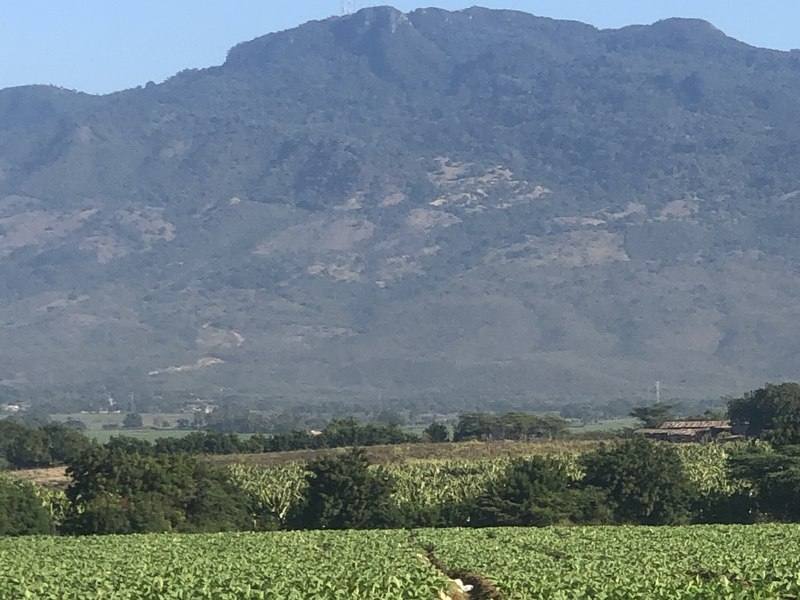
The growing regions sit just south of the equator, and the cloud cover sits over them nearly year-round. In Connecticut, growers stretch shade cloth over the fields to filter the sun. In Ecuador, the sky does it for free. The result is wrapper leaf with few rivals: silky, oily, and thin-veined.
The industry noticed decades ago. Much of the world's premium wrapper leaf now starts in Ecuador, even when the cigar is rolled somewhere else entirely.
The Habano story starts with a disease. After blue mold wiped out the Corojo leaf in the 1990s, growers created two Habano strains: the Habano and the Habano 2000. Ecuador became the natural home of the first. The sky was already there.
Sumatra in Quevedo
Ecuadorian Sumatra grows in Quevedo, a fertile subtropical region in Los Ríos Province, and it is used primarily as cigar wrapper. Since the 1950s, Los Ríos has been one of the world's most important tobacco regions, built by Cuban migrant growers looking for a better commercial and political climate. They added tobacco to the traditional crops of bananas, cacao, and coffee.
The founding partnership was Guillermo de la Portilla and José Aray. Portilla persuaded Aray, owner of large agricultural properties in Los Ríos, to set aside land for tobacco; at Hacienda Paulina they found the conditions they wanted. The business continues through the second and third generations of the Aray family.
The early plantings mixed Cubano and Sumatra varieties while the American Tobacco Company grew its Connecticut 711 for candela, with Luis Pedreira running the business until it passed to the Oliva family. The valley was an experiment from the start. The experiments that worked became industries.
In 1967 José Aray crossed Cubano and Sumatra varieties and developed the standard Ecuadoran Sumatra breed: the wrapper sought worldwide ever since. The Aray family operation, with the Achievement Cigar Company, still grows and develops the Sumatra breed alongside Connecticut, Habano 2000, and Criollo 98, for wrappers and fillers alike.
One trade account places Oliva family Sumatra crops in reddish-brown volcanic soil at the foot of the Andes in Guayas Province, under natural cloud cover; the encyclopedia account centers Quevedo in Los Ríos. The sources differ on the exact ground. They agree on the sky: it is the cloud filter that makes the leaf.
Habano, and the other Habano
Ecuadorian Habano has been grown since 2001, mainly by the Oliva family, not to be confused with Oliva Cigars. About seventy percent of the family's land goes to it. The plants grow tall with oily, pliable leaves, and the cloud cover acts as a natural sun filter; with the valley mists, the leaves come out silky and oily to the touch, reddish-brown, with a very small vein structure. Fermentation and aging decide whether the wrapper smokes intense and heavily spiced or medium-bodied and sweet.
The contrast is Nicaragua. Nicaraguan Habano grows fully exposed to the sun in the Jalapa Valley and Estelí, producing a thinner leaf with a more decadent aroma and robust, spicy flavors. Same seed family, different sky, different cigar.
Then there is Habano 2000, a separate hybrid of Connecticut Shade and Cuban seed, grown under shade cloth. It is typically darker, with a musty, earthy taste, and it has faded in popularity since the 1990s. It grows in Ecuador, Honduras, and Nicaragua. The name causes confusion. The leaf does not.
The names on the bands
Ashton VSG wears the story on its band: Virgin Sun Grown. The wrapper is Sumatra seed grown by the Oliva family, owners of the Oliva Tobacco Company, a premium grower for more than 87 years and distinct from the Oliva cigar brand. The crops grow in reddish-brown volcanic soil at the foot of the Andes in Ecuador, naturally filtered from direct sunlight by the region's cloud cover, over Dominican long-filler blended by Carlito Fuente. It debuted in 1999. It is not an Ecuadorian Habano, whatever the nickname suggests.
Ashton ESG is the correction. The wrapper for the Estate Sun Grown comes from the Fuente family's Chateau de la Fuente estates in the Dominican Republic, where the OpusX wrapper is cultivated, but grown in direct sunlight. It reached the market in 2006 as a Dominican puro. Two Ashtons, two countries, one lesson: read the band carefully.
The Oliva Tobacco Company of Tampa, Florida, the farming and brokerage organization, grows much of the Ecuadorian Havana crop for manufacturers including Altadis, Fuente, and Rocky Patel. José 'Pepín' García's blends rely heavily on Ecuadorian wrappers. The leaf travels. The clouds stay.
Connecticut, without the cloth
Ecuadorian Connecticut is Connecticut seed grown in Ecuador, where near year-round cloud cover replaces the shade cloth. The leaf shows a golden to tan hue, paler and drier than American Connecticut Shade, with published notes of white pepper, leather, and nuts. Tapado means shade-cloth cultivation. Ecuador mostly skips the cloth.
The economics are simple. Shade cloth costs money to buy, raise, and maintain. Clouds cost nothing. Ecuador's wrapper industry is built on a subsidy from the sky, and no competitor can undercut it.
The equator gives Ecuador what other regions manufacture: filtered light, steady warmth, volcanic soil. The growers supply the rest: the crosses, the curing barns, the patience. Three seeds, one sky, and a wrapper industry that learned to read the clouds.