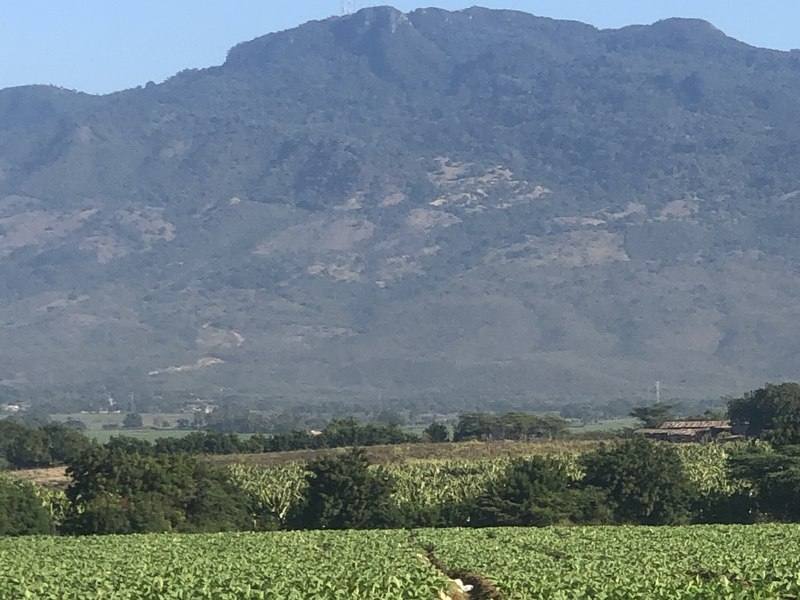
Honduras: The Quiet Power
The Jamastrán Valley rolls a huge share of the world's cigars and asks for none of the credit.

Danlí sits in eastern Honduras, a working town in the Jamastrán Valley, and it is the center of an industry most smokers never think about. Honduras does not market itself the way Cuba or Nicaragua do. It manufactures: quietly, at scale, for some of the biggest names in the business.
The valley's signature seed is an exile. Corojo, the historic Cuban wrapper variety, no longer grows in Cuba; the pure strain is grown today in the Jamastrán Valley and, as Kenbano, in Kentucky. The leaf is oily and reddish-brown, robust, spicy, and zesty. Connecticut seed and Cuban seed grow in the valley's fields alongside it.
The quiet has a shape: big factories, long contracts, and leaf that ends up in other brands' boxes. Honduras is the industry's engine room.
Danlí is not a resort town. It is a factory town, and the factories are the attraction: long rolling galleries, box plants, aging rooms stacked with bales. The romance is in the output.
The valley's tobacco travels farther than its name. Honduran leaf fills cigars rolled in Nicaragua, the Dominican Republic, and the United States. The engine room supplies the whole machine.
The Plasencia model
That is the Honduran business model in one line: grow some, buy some, roll for everyone.
The engine room has a name. Nestor Plasencia Sr. was born in Cuba in 1949 to a tobacco family that emigrated after the 1959 Revolution. He built farms and factories in Nicaragua, lost them to Sandinista expropriation in the early 1980s, and moved his focus across the border to Honduras.
Blue mold destroyed the family's tobacco crops, and Plasencia pivoted from growing to manufacturing: the cigar factory in Danlí began in 1985. The group now employs about 6,000 people across Honduras and Nicaragua and makes more than 35 million cigars a year, roughly sixty percent of them in Honduras. Primary operations center on two buildings in Danlí, with smaller units in El Paraíso and Morocelí.
In the mid-1990s, about seventy percent of the tobacco in Plasencia-made cigars came from the family's own Honduran and Nicaraguan fields, the rest bought on the market. Output grew from about one million cigars in 1986 to roughly 33 million a decade later, across thirty-plus labels: J.R. Tobacco, Swisher International, Rocky Patel, and many more. The factories that make other brands' cigars are the point. Plasencia is the manufacturer other manufacturers call.
Succession
The next generation is in place: Plasencia's American-educated sons, Nestor Jr. and José Luis, are active in the business. The engine room is a family firm, and it plans to stay one.
His philosophy is short: 'Anyone who tells you they know everything there is to know about tobacco is either a liar or a fool.' The variables are too many, he says. Control what you can.
By 2010 the trade press was calling him one of the foremost tobacco experts in the world. He answered with the liar-or-fool line. The humility is part of the expertise.
Camacho
The valley's signature brand is Camacho, built by the Eiroa family in Danlí. The family bought the brand in 1995 and began experimenting with Corojo wrappers, noted for their brownish-red hue and distinctive spiciness. The original Camacho Corojo debuted in 2000: an all-Honduran recipe built on the Corojo seed that Diego Rodríguez had refined in Cuba decades earlier. It put the brand on the map and gave Honduras its first unmistakable profile: bold, peppery, vigorous.
The line grew: Camacho Diploma, an annual or semi-annual limited release, and Camacho Triple Maduro, an all-maduro blend built for the brand's boldest fans. The profile never softened. Bold is the brand.
In 2008 the Oettinger Davidoff Group bought Camacho, seeking a full-bodied Honduran brand to balance its mild Dominican portfolio. In 2017 Davidoff opened a new Honduran factory employing about 500 workers. The Eiroas moved on. The Corojo stayed.
Today the Camacho portfolio is organized around boldness as a brand: bright packaging, a scorpion motif, the tagline 'Live Loud.' The marketing is new. The leaf is the same Corojo the Eiroas bet on in 1995.
The contract houses
Honduras is where brands go to be made. Rocky Patel produces mostly in Danlí at El Paraíso, a 120,000-square-foot facility leased from the Plasencia family. Its Number 6 wears a Honduran Corojo wrapper over a Honduran binder and Honduran and Nicaraguan filler: the valley, rolled and boxed.
Rocky Patel's own factory, Tabacalera Villa Cuba, stands in Estelí, Nicaragua, not Honduras: a reminder that the industry's map is drawn in pencil. But the company's volume heart beats in Danlí, in a building with the Plasencia name on the deed.
Alec Bradley does not own a Honduran factory. Its Black Market Filthy Hooligan and Shamrock cigars are rolled by the Plasencia family at their Tabacos de Oriente factory in Danlí. The distinction matters in an industry where the name on the band is not always the name on the building. In Honduras, the name on the building is often Plasencia.
The Sandinista expropriations of the early 1980s are the reason. When producers lost their Nicaraguan farms and factories, many crossed the border, and Honduras became the primary base. The valley did not steal the industry. It received it.
Honduras will not win the romance contest. Cuba has the myth, Nicaragua the boom, the Dominican Republic the elegance. Honduras has the output: tens of millions of cigars a year, rolled in big quiet factories, in brands you already smoke. The quiet power does not ask for credit. It just keeps rolling.