The Women Rolling
The cigar was long a male preserve. At Havana's El Laguito factory, nine out of ten workers are women, and the hands behind the bench have a story of their own.

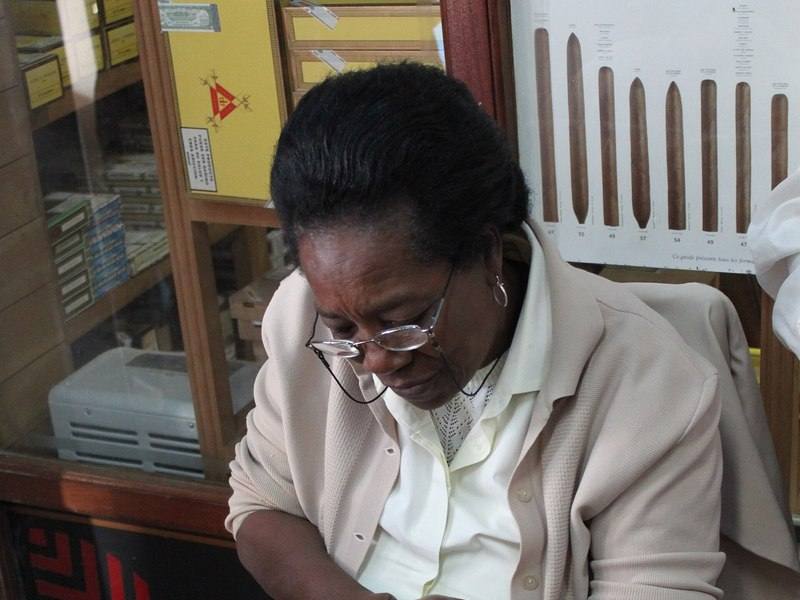
"Gripped between the teeth of Fidel Castro, Winston Churchill, a Cuban peasant or a Western businessman, the cigar has long been a male preserve." That was the opening line of an Agence France-Presse dispatch from Havana in 2010, as the agency reported it. The second half of the story was standing at the rolling tables. At the El Laguito factory in Havana, the birthplace of Cohiba, 90 percent of the 300 workers are women, according to Habanos vice-president Javier Terres. The most famous rolling room in Cuba is overwhelmingly female.
He told me I made good cigars.
The cigar's image never caught up with its making. The advertising is all mahogany and masculine ritual. The reality, in Havana at least, is a factory floor of women doing the most skilled manual work in the industry, bunching and wrapping leaf by hand at a speed and consistency no machine has matched.
Norma Fernandez
For fourteen years, Norma Fernandez made the long Cohiba Lanceros, the thin cigars famously enjoyed by Castro himself. When Castro gave up smoking in 1986, Fernandez quit her job as a torcedora, a cigar roller. She had met him two or three times. "He told me I made good cigars," the 57-year-old Fernandez said.
"I enjoy smoking very much," said Miriam Obelin, 60, photographed with clouds of smoke blurring her face. "A woman does not lose her femininity just because she smokes, quite the opposite." The dispatch noted that in a Latin country known for its male chauvinism, cigar-smoking women, workers or businesswomen, were still sometimes looked down on. The women at the tables disagreed, on the record.
By 2010 she was in charge of quality control for the Cohiba Behike, then the world's most expensive cigar. Fourteen years at the bench, and then the final word on whether anyone else's work was good enough. There is a career arc in that sentence that no marketing department could invent: from rolling the leader's cigars to judging everyone else's.
The bench
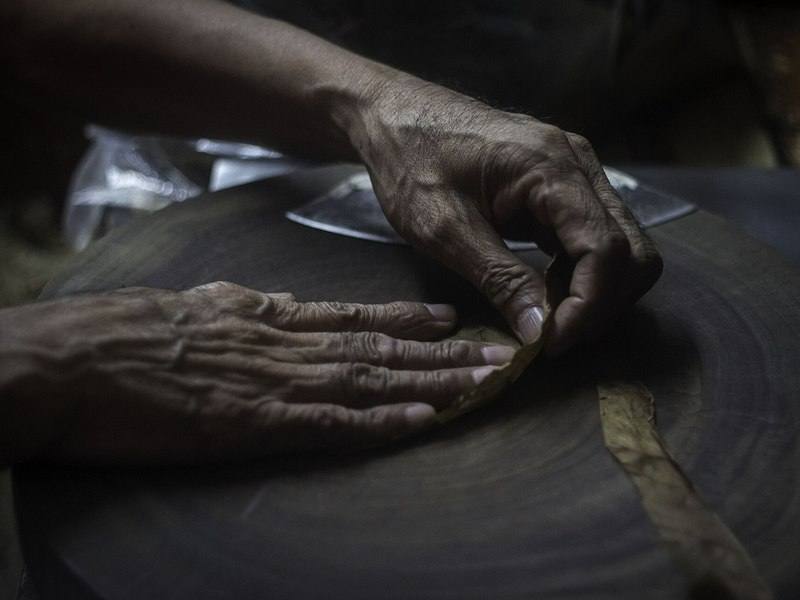
A torcedora rarely needs more than a few tools: a board, a blade, glue, hands. The trade is, as the retailer EGM Cigars puts it, a Cuban institution, and its celebrated practitioners include women like Juanita Ramos Guerra, described by EGM as a legendary torcedor, who walked through her rolling process step by step for their readers. The entubado bunching, the book bunching, the cap applied in a single practiced motion: the techniques are the same ones the trade has used for more than two centuries.
The methods have not altered in more than two centuries, by that account. That is the assessment of the retailer EGM Cigars, and it is meant as praise: while other countries turned to machines, the Cuban rolling room kept the handwork, and the handwork kept its standards. A roller rarely needs more than a few tools to perform the mastery. The mastery is the point.
And the work has spread beyond the benches. Women in Cuba are playing a visible role across more of the tobacco chain, not just the rolling rooms. The leaf passes through women's hands from the field to the box, and the industry's image is only beginning to admit it.
The younger generation is already at the tables. "A woman who smokes is beautiful and elegant," said Yelena Vento, a 22-year-old cigar roller at the time of the AFP dispatch, a trail of fragrant smoke drifting behind her. Her boyfriend, she reported, loved the smell of tobacco and did not mind at all.
The lector
The rolling room has its own soundtrack, and it is older than anyone at the benches. Since 1865, lectors have read aloud to Cuban cigar workers as they roll: newspapers, novels, horoscopes, the news of the day. The practice began as education for rollers from poor backgrounds, and it gave the industry one of its most famous names. The workers' continual requests to hear Shakespeare's play read aloud inspired the owners to name a brand for it: Romeo y Julieta.
Today the rollers choose their lectors and pick the reading: horoscopes and news, classic books and magazine articles. The storytellers take the job seriously, finding ways to inspire the benches. Nearly two centuries after the practice began, the factory still runs on words as well as hands.
Think about what that means for the women at the tables. The lector tradition made the factory a place of words as well as hands, and the brand on the band a tribute to the audience. The rollers chose the stories. The stories named the cigars.
The Julieta
In 2010, Habanos made its nod explicit. At the 12th Havana cigar festival, the company launched the Julieta: short, slim, light in color, twelve centimeters long and barely over one wide, designed, its maker said, to be enjoyed quickly, following the rhythms of modern life. "It's a homage to women," said Terres. The industry's own figures held that only ten percent of the world's cigar lovers were women, and Habanos decided to go after the other ninety.
The design brief was explicit: short, slim, light in color, twelve centimeters long and a slender 1.3 across, made to be enjoyed quickly, following what its maker called the life rhythms of today's sophisticated, active women. In a Latin country known for its male chauvinism, Habanos put its newest launch behind the opposite argument, and called it an homage.
The cigar will always photograph as a masculine object. The photographs lie, or at least they crop. Behind every band is a bench, and at the most storied benches in Havana, the hands are women's. They have been there for decades. The industry is only now learning to say so.